Slots of Vegas Michigan warnings and availability check
This is a Michigan-specific evidence signal, not a claim that every allegation is proven or that the service remains available there.
Michigan answer: an official red warning, with important limits
Slots of Vegas carries a red signal for Michigan because the Michigan Gaming Control Board named the brand in two separate cease-and-desist news releases dated April 9 and September 23, 2025. That is official adverse evidence for this jurisdiction. It does not prove that a player lost money, that a withdrawal failed, or that the site remains accessible today.
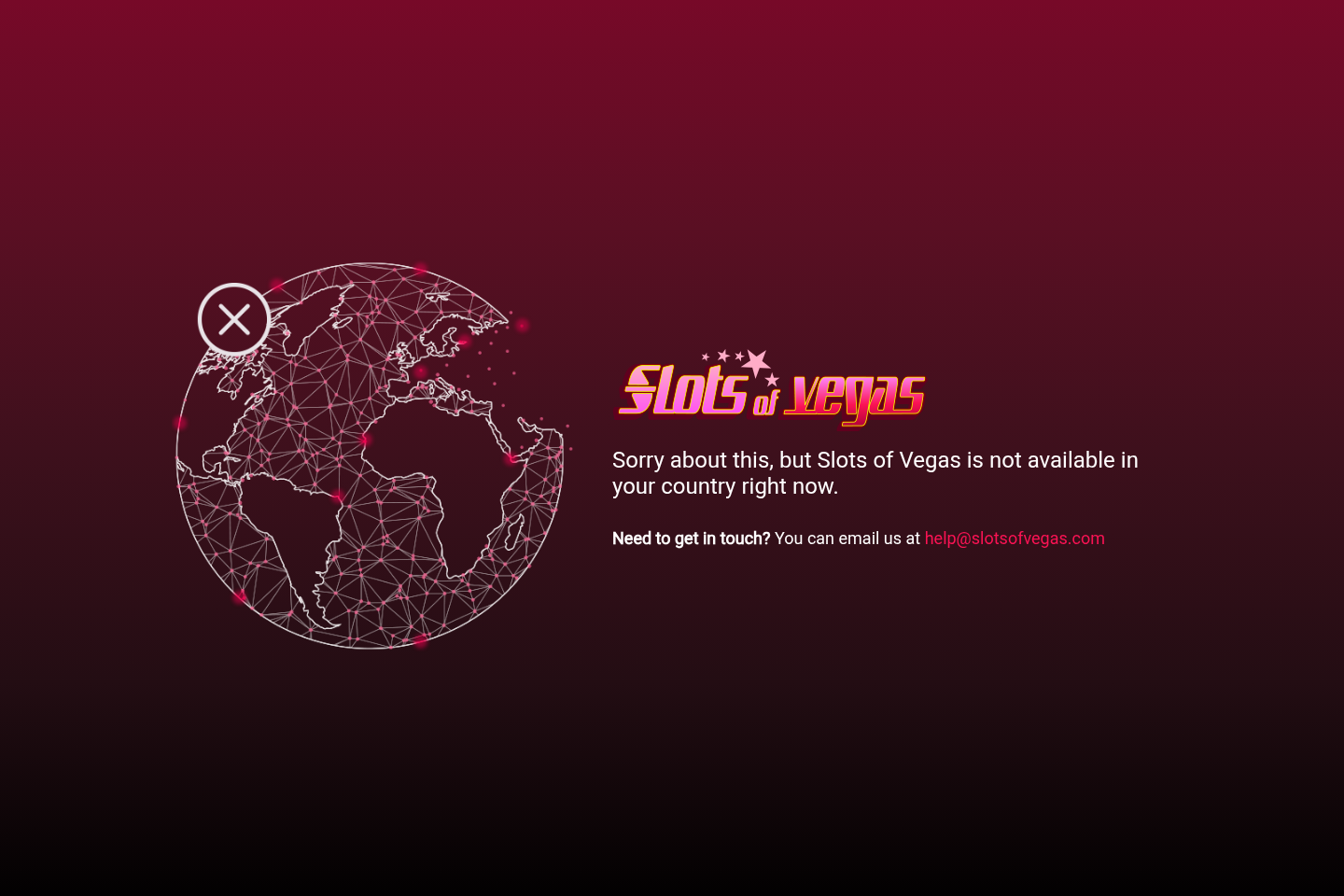
A browser check dated October 5, 2026 adds a different fact: the exact published by the operator terms address redirected to a screen stating that the service was not available. That capture did not expose current terms and did not permit an account, deposit, payment, withdrawal, support, or geolocation test. The unavailable result must therefore be read as a limited availability observation, not as proof of compliance, closure, or nationwide status.
| Question | Evidence-led answer |
|---|---|
| Is there an official Michigan warning? | Yes. MGCB named Slots of Vegas in two separate 2025 cease-and-desist news releases. |
| Was current Michigan access confirmed? | No. The checked operator URL redirected to a Not Available screen. |
| Was a player account or withdrawal tested? | No. No account, deposit, withdrawal, support, or payment behavior was tested. |
| Does the record prove consumer loss? | No. The supplied regulatory records do not establish an individual loss or payout failure. |
What the two MGCB notices establish
The April 9, 2025 MGCB news release named Slots of Vegas in a cease-and-desist action. A second, separate MGCB news release dated September 23, 2025 named the brand again. These are primary regulatory records, rather than operator marketing or an anonymous user allegation. Their significance is that Michigan’s gambling regulator publicly associated the named brand with state enforcement activity on two documented dates.
The notices support a strong caution for anyone assessing Slots of Vegas from Michigan. They should not be expanded beyond their documented scope. They do not, by themselves, prove that a particular person deposited, lost funds, received misleading support, or experienced a denied payout. They also do not establish what a visitor can access from every other state or country.
The correct conclusion is narrower: there is official adverse evidence directly relevant to the brand in Michigan. A Michigan resident should not treat the name, a polished website, or any claimed non-Michigan credential as a substitute for state authorization. The current status of any gambling product should instead be checked against the MGCB’s own authorized-provider information.
| Record | Date | What it supports | What it does not prove |
|---|---|---|---|
| First MGCB cease-and-desist news release | April 9, 2025 | Slots of Vegas was named in an official Michigan enforcement announcement. | A consumer loss, failed withdrawal, or present-day access. |
| Second MGCB cease-and-desist news release | September 23, 2025 | The brand was named in another separately dated Michigan enforcement announcement. | Nationwide illegality or an individual fraud finding. |
| Operator-domain capture | October 5, 2026 | The checked terms URL redirected to a Not Available screen. | Why access was unavailable, whether accounts still exist, or whether another visitor would receive the same result. |
What the unavailable screen actually tells us
The checked address was the published by the operator terms URL at the exact Slots of Vegas domain. On October 5, 2026, that address redirected to a Not Available screen. This is useful because it records what happened at a brand-specific first-party address on a known date. It also prevents an outdated enforcement notice from being incorrectly described as proof that the service was accessible during the later check.
The capture is not an authenticated operator dashboard, a cashier view, a terms document, or a regulatory record. No login was attempted, no location controls were tested, and no account was created. The observation cannot establish whether the response was caused by location, site configuration, account status, maintenance, or another technical or commercial reason.
It would also be inaccurate to interpret the unavailable screen as proof that the regulatory concern was resolved. Unavailability and authorization are separate questions. A service can be unavailable during a check without being authorized, while a working website is not evidence of Michigan approval. The official provider record remains the appropriate place to verify state authorization.
Michigan authorization requires an exact match
Michigan’s regulator publishes information about authorized online gaming and sports-betting platform providers. A meaningful check requires more than searching for a similar brand name. The product, legal operator, and exact website or application need to correspond with the regulator’s current record. A resemblance between names is not enough, and a license claimed for another jurisdiction does not grant permission to offer regulated online casino gambling in Michigan.
For Slots of Vegas, the available evidence does not include a current Michigan authorization matching the exact published by the operator domain. Instead, it includes two Michigan cease-and-desist news releases naming the brand. That combination supports the red Michigan signal. It should not be rewritten as a claim about every jurisdiction, every related company, or every similarly named product.
Residents comparing operators can use the Michigan casino warning and license-check guide to understand how official adverse records differ from an authorized-provider match.
| Check | Why it matters | Slots of Vegas evidence |
|---|---|---|
| Exact brand or product | Similar names can refer to unrelated services. | The MGCB releases expressly named Slots of Vegas. |
| Exact domain or application | A brand name alone does not authenticate a website. | The first-party terms URL was checked and redirected to an unavailable screen. |
| Legal operator | Authorization attaches to identified regulated relationships, not merely marketing names. | No current operator identity was verified from accessible terms during the capture. |
| Michigan authorization | Permission elsewhere does not equal permission in Michigan. | No matching Michigan authorization was supplied; official adverse notices were supplied. |
| Current date | Access and regulatory records can change. | Notices are from 2025; the domain capture was checked October 5, 2026. |
Operator identity and terms remain unverified
The published by the operator terms address would ordinarily be relevant when identifying the contracting entity, governing terms, account restrictions, and dispute process. During the dated check, however, it did not provide readable terms; it redirected to the unavailable result. Consequently, the supplied record does not support naming a current legal operator, corporate address, license number, payment processor, or dispute forum.
That absence should remain explicit. Guessing an entity from an old brand association, a third-party directory, or a similarly named business could connect the warning to the wrong organization. It would be equally unreliable to infer that an unavailable terms address means no legal entity exists. The evidence only shows that the checked first-party URL did not expose the terms during the capture.
Any future identity claim should be supported by a current official record or accessible first-party terms and then reconciled with Michigan’s authorization records. Until that match is available, the brand-level MGCB notices and the limited domain capture are the defensible findings.
No payment or withdrawal performance was tested
There is no brand-specific transaction evidence in the supplied record. No deposit was made, no card or bank account was used, no cryptocurrency transfer occurred, and no withdrawal was requested. There is therefore no basis to state that Slots of Vegas currently accepts a particular payment method, charges a particular fee, imposes a particular limit, processes withdrawals within a stated period, or denies payouts.
The MGCB notices must not be used as substitutes for payment evidence. An official cease-and-desist action is highly relevant to Michigan authorization, but it does not document the result of a specific player transaction unless the underlying record says so. The supplied notices do not establish an individual consumer loss.
| Area | Status | Defensible conclusion |
|---|---|---|
| Account registration | Not tested | No claim about eligibility, identity checks, or account approval. |
| Deposits | Not tested | No verified payment methods, limits, fees, or processing times. |
| Withdrawals | Not tested | No finding about payout approval, delay, denial, or speed. |
| Customer support | Not tested | No assessment of contact channels, availability, or response quality. |
| Geolocation | Not tested | No conclusion about the cause or geographic scope of the unavailable response. |
People reviewing an unfamiliar transaction can follow the record-preservation steps in the casino card and chargeback records guide. Those steps do not imply that a refund or chargeback is available in any particular case.
Is Slots of Vegas legit or a scam?
A single “legit” or “scam” label would blur several different questions. For Michigan authorization, the official record is adverse: MGCB named Slots of Vegas in two 2025 cease-and-desist announcements, and no current authorization matching the exact domain was supplied. That supports a red warning for Michigan residents.
Calling the brand a proven consumer scam would go further than the evidence allows. The records provided do not establish deception against a named consumer, a documented unpaid balance, a criminal judgment, or a finding that every transaction connected with the brand was fraudulent. No account or cashier test was performed. The later unavailable capture also prevents any claim that current Michigan operation was observed.
The practical distinction matters. A person does not need proof of an individual payout failure to take an official state warning seriously. At the same time, accurate reporting requires separating regulatory status from allegations about specific losses. The strongest supported wording is that Slots of Vegas has an official adverse Michigan record and was unavailable at the exact operator URL during the later capture, while consumer-loss and current-operation claims remain unproven.
How to preserve and report a complaint
Anyone with a real transaction or account dispute should preserve original records before contacting a regulator, payment provider, or reporting service. Useful material can include the full URL, date and time, account identifier, transaction reference, payment statement, original messages, and screenshots showing the complete screen. Records should be retained in their original form where possible rather than cropped in a way that removes dates or addresses.
A Michigan-related report should distinguish direct knowledge from inference. State what was paid, what was promised, what response was received, and which records support each point. Do not present the two MGCB notices as proof that an individual claim has already been decided. Conversely, do not omit the exact domain or transaction descriptor merely because it differs from the marketing name.
The Federal Trade Commission provides a channel for reporting suspected fraud. Filing an FTC report does not create a finding, guarantee reimbursement, or replace a dispute submitted within a payment provider’s deadline. People can consult the unlicensed casino reporting guide for an evidence checklist and routing considerations.
| Record to preserve | What to capture | Why it helps |
|---|---|---|
| Website record | Full address, date, time, and complete screen | Connects the observation to a specific domain and moment. |
| Transaction record | Amount, date, descriptor, reference, and payment channel | Helps a payment provider identify the transaction. |
| Communications | Complete messages with sender and timestamps | Documents what each party stated without paraphrase. |
| Account record | Username or account ID without publishing credentials | Helps identify the account while protecting passwords. |
| Prior report | Agency or provider reference number | Allows follow-up without implying the report was upheld. |
What remains unknown
The evidence leaves several material questions open. The current legal operator was not identified from accessible terms. Present payment methods, verification rules, withdrawal procedures, fees, limits, support channels, and dispute terms were not documented. The cause and geographic scope of the Not Available response are also unknown because no geolocation or multi-region access test was conducted.
There is no supplied proof of a consumer loss, a denied payout, or a pattern of complaints. There is likewise no available evidence that the operator currently serves Michigan. The absence of a completed transaction test is not a favorable or unfavorable payment finding; it simply means payment performance cannot be rated.
Future evidence could change the access or identity findings, but it would not erase the historical fact that MGCB named the brand in two separately dated 2025 notices. Any reassessment should preserve that chronology: official Michigan actions in 2025, followed by an unavailable result at the checked first-party address on October 5, 2026.
michigan.gov · reportfraud.ftc.gov · content.govdelivery.com · content.govdelivery.com
Frequently asked questions
Is Slots of Vegas legal in Michigan?
The available evidence does not establish Michigan authorization. Instead, the Michigan Gaming Control Board named Slots of Vegas in cease-and-desist news releases dated April 9 and September 23, 2025. Michigan residents should verify the exact product, operator, and URL against the regulator’s current authorized-provider records.
Why does Slots of Vegas have a red signal?
The red signal is based on official adverse Michigan records: two separately dated 2025 MGCB cease-and-desist announcements naming Slots of Vegas. It is jurisdiction-specific and does not mean that an individual consumer loss or failed withdrawal was proven.
Was Slots of Vegas accessible during the latest check?
No current service access was confirmed. On October 5, 2026, the checked published by the operator terms URL redirected to a Not Available screen. The reason and geographic scope were not established, and no account or geolocation test was performed.
Does the MGCB action prove that Slots of Vegas failed to pay players?
No. The supplied MGCB records support a Michigan regulatory warning, but they do not prove a specific unpaid withdrawal, consumer loss, or payment failure. No deposit or withdrawal test was conducted.
Can a foreign gambling license authorize Slots of Vegas in Michigan?
No foreign credential should be treated as Michigan authorization. Michigan status requires a match with the state regulator’s current records for the relevant product, operator, and exact website or application.
Where can a consumer report suspected fraud?
The Federal Trade Commission provides a reporting channel for suspected fraud. A report is not a legal finding, does not guarantee recovery, and does not replace a timely dispute with a payment provider or contact with the appropriate state authority.