
PlayLive! Casino: license, operator, disputes, and verification

A disputed round should begin with a session ID, game name, date, time, stake, displayed result, and account balance—not an immediate conclusion that the casino is a scam. Those details create a record that the operator can investigate and that a regulator can understand if escalation becomes necessary. For PlayLive! Casino, the verified packet supports a positive but narrowly defined finding: the Pennsylvania Gaming Control Board identifies the service among regulated Pennsylvania interactive gaming operators, and the supplied operator record names Stadium Casino RE, LLC d/b/a Live! Casino Philadelphia. The supplied record states that authorization covers slots and table games and commenced August 14, 2020.
That evidence supports a green signal for the precise Pennsylvania identity reviewed here. It does not prove that every disputed round was settled correctly, that every withdrawal is fast, or that a similarly named website is genuine. The exact address matters: playlive.com. So do location and product availability, because one state’s authorization does not automatically permit the same service in every other state.
Verdict: scam or legitimate?
The current primary evidence supports treating the reviewed Pennsylvania service as legitimate rather than an anonymous or unlicensed casino. The decisive point is not advertising, visual polish, or a user rating. It is the match among the regulated service, the named operator, the authorized activities, and the exact internet address supplied for review.
| Verification point | Verified finding | Practical meaning |
|---|---|---|
| Internet address | playlive.com | Compare the complete address before entering credentials or payment information. |
| Named operator | Stadium Casino RE, LLC d/b/a Live! Casino Philadelphia | This is the legal identity supplied for the regulated service. |
| Pennsylvania status | PGCB-authorized slots and table games | Primary regulatory evidence supports the reviewed Pennsylvania operation. |
| Commencement date | August 14, 2020 | This is the supplied start date for the authorization, not an expiration date. |
| Signal | Green | Current primary evidence supports the precise service and operator match. |
A green signal is not a guarantee that no customer will experience a technical fault, account review, delayed decision, or disputed transaction. It means the threshold question—whether there is current primary support for the identified regulated operation—has a positive answer. A complaint about a particular session remains an allegation unless account records, game records, transaction data, or a competent authority establish what occurred.
Licensed identity and exact address match
The strongest record in the packet is the Pennsylvania Gaming Control Board directory, checked August 21, 2026. It presents 24 named brands as regulated Pennsylvania interactive gaming operators. The supplied entity record connects PlayLive! Casino with Stadium Casino RE, LLC d/b/a Live! Casino Philadelphia and states that slots and table games were authorized beginning August 14, 2020.
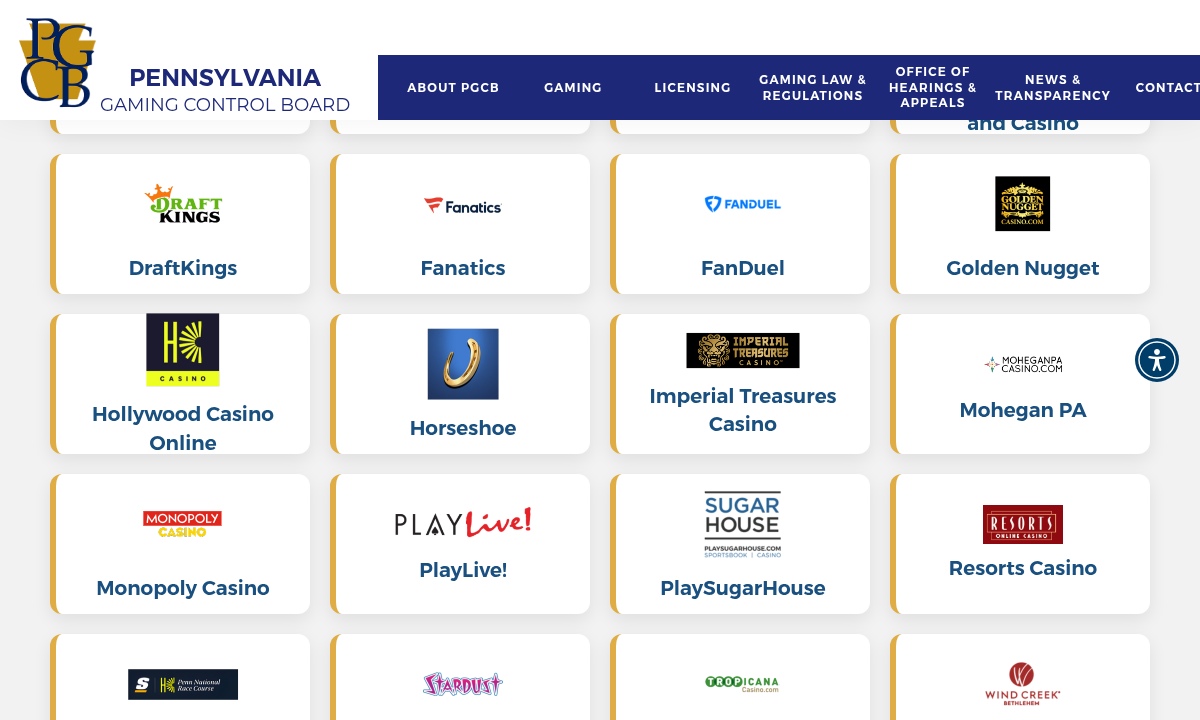
The address check should be literal. Confirm that the browser shows playlive.com, without added words, substituted characters, unexpected prefixes, or a different ending. A familiar color scheme or copied name is not enough. Do not rely on a search advertisement, social-media message, or unsolicited support link as proof of identity.
The packet does not supply a license number or expiration date. Neither should be guessed. It also does not establish authorization outside Pennsylvania. A valid Pennsylvania record proves a Pennsylvania regulatory relationship; it does not create nationwide legality.
Reconstructing a disputed round or session
When a game result appears wrong, preserve the sequence before restarting the application, clearing browser data, or continuing to wager. The goal is to identify one reproducible event. A statement such as “my balance changed incorrectly” is difficult to investigate. A statement tied to a session ID, round ID, exact time, stake, and balance movement gives support staff a defined record request.
| Item to preserve | Useful detail | Why it matters |
|---|---|---|
| Session or round ID | Copy the complete identifier | It lets the operator locate the server-side record. |
| Game information | Title, provider if displayed, stake and feature | Similar game names or bonus modes can produce different records. |
| Time evidence | Date, local time, time zone and device clock | It narrows the account-history search. |
| Balance sequence | Balance before, stake, displayed win or loss, balance after | It shows the exact arithmetic being challenged. |
| Visual record | Uncropped screenshot or screen recording | It preserves messages and surrounding context. |
| Device context | Device type, operating system, browser or application version | It can distinguish display failure from account settlement. |
Screenshots help, but they are not the same as certified game logs. Preserve originals rather than edited images. If a screen showed a win while the account history later recorded another result, ask for the underlying game record and the rule used to settle the round. Do not describe that mismatch as proven manipulation before those records are examined.
Account history and transaction evidence
A round dispute and a payment dispute require different evidence. Game history addresses stakes, outcomes, and settlement. A cashier ledger addresses deposits, withdrawals, reversals, and adjustments. A bank or card statement records the external payment movement. Compare all three where available instead of assuming that one screen explains the entire event.
Start by exporting or capturing the account history for a narrow date range. Record transaction identifiers, status labels, amounts, and timestamps. If the displayed balance changed after a session ended, note whether the ledger shows a correction, void, bonus adjustment, or payment reversal. The packet contains no account test, deposit test, withdrawal test, or direct observation of the cashier, so no claim about processing speed or reliability is supported.
| Question | Best available record | Unsupported shortcut |
|---|---|---|
| Was a deposit credited? | Cashier receipt plus bank or card record | Treating a pending bank entry as final settlement |
| Was a withdrawal requested? | Withdrawal ID, amount, time and status | Relying only on a reduced playable balance |
| Was a round settled? | Game history and underlying round record | Using a cropped result screen alone |
| Was money returned? | External statement and casino ledger | Assuming a reversal date equals the bank posting date |
| Was a bonus involved? | Accepted terms and bonus ledger | Applying current terms to an earlier promotion |
Keep sensitive documents private. Regulators and authorized support channels may need selected records, but public posts should not expose full card numbers, identification documents, home addresses, or account credentials.
Payments, withdrawals, and identity checks
The verified packet does not identify accepted deposit methods, withdrawal methods, fees, minimums, limits, processing windows, or identity-verification requirements. It would therefore be misleading to list specific cards, bank services, digital wallets, or payout times. Availability can also vary by state, account status, and payment provider.
Before depositing, capture the cashier terms shown inside the verified service. Record the payment method, any fee, deposit limit, withdrawal eligibility, and whether a promotion changes cash-out conditions. For a withdrawal, preserve the request confirmation and status changes. Distinguish an operator review from the additional time a bank may take after approval.
Identity checks may involve personal information, but no specific document list is established by the supplied evidence. Use only the support and upload paths reached from the verified address. Do not send identity documents to an email address or messaging account merely because it displays the casino name. If a request seems unusual, ask support to confirm the requirement inside the authenticated account and retain that response.
For a structured review of cashier evidence, use the payment checks guide. It helps separate operator records, payment-network records, and assumptions without claiming a withdrawal outcome that has not been tested.
Complaint route and escalation package
Begin with the operator because it controls the account, game, and transaction records. State one requested remedy: an explanation of a round settlement, correction of a ledger entry, completion or cancellation of a withdrawal, or clarification of an identity review. Include identifiers and a concise chronology rather than a long narrative without dates.
If the response does not resolve the issue, preserve the ticket number, full correspondence, attachments, and final position. The regulatory record supports a Pennsylvania connection, but the packet does not provide a specific complaint form or claim that a regulator has ruled on any individual allegation. Consult the complaints and scam warnings guide for evidence organization and the state license checks resource before choosing a jurisdictional route.
A useful escalation package contains:
- Account name or identifier, with unnecessary personal data redacted from working copies.
- Session, round, deposit, or withdrawal identifiers.
- A timestamped chronology in one time zone.
- Original screenshots and downloadable histories.
- Operator responses and ticket numbers.
- The amount disputed and the exact resolution requested.
Do not multiply tickets unless instructed; fragmented conversations can obscure the chronology. Avoid chargeback claims or accusations that exceed the evidence. A payment dispute, gaming complaint, and identity-review question may follow different processes.
Clone and impersonation checks
A regulated name can still be copied by an unrelated party. The most important protection is matching the complete address to playlive.com before signing in. Type or use a trusted saved address rather than following an unsolicited message. Confirm the browser connection, inspect spelling carefully, and be suspicious of pages that demand cryptocurrency transfers, remote-access software, or identity files through informal chat.
| Check | Consistent sign | Warning sign |
|---|---|---|
| Address | Exact playlive.com address | Added words, altered spelling or another ending |
| Account access | Reached from the verified service | Sign-in form sent through an unsolicited message |
| Support | Contact path available after navigating from the verified address | Pressure to move to private messaging immediately |
| Payments | Instructions displayed within the authenticated cashier | Transfer to a personal account or unrelated wallet |
| Verification | Request confirmed within the account | Demand for documents through an unverified channel |
A copied logo proves nothing, which is why the logo shown above is an orientation asset rather than regulatory evidence. Likewise, a screenshot of a regulator directory should be checked against the live primary record when making a current decision. If an address differs by even one character, stop before entering credentials and document where the link originated.
State legality is location-specific
Pennsylvania authorization does not answer whether the service is lawful or available in every U.S. location. State regulators maintain their own approved-provider frameworks. Michigan explains the distinction between its authorized provider list and operators that receive cease-and-desist letters in its legal-versus-illegal gaming guidance. New Jersey states that services absent from its approved internet gaming list are not approved to offer internet gaming in that state.
These two records are jurisdictional examples, not proof that the reviewed service is approved or prohibited in Michigan or New Jersey. The packet supplies no matching authorization for either state, so no such conclusion is made. Check the regulator for the state where play occurs and match the exact service, legal entity, and address. Physical presence, age, geolocation, and product restrictions may matter, but their specific requirements are not established in this packet.
The safe conclusion is narrow: current primary evidence supports the identified Pennsylvania operation. Outside Pennsylvania, status remains unverified here. Do not treat access to a website, successful account creation, or acceptance of a payment as a substitute for state authorization.
Risks, unknowns, and limits of the green signal
The green signal answers an identity-and-authorization question, not every quality or dispute question. There is no supplied test of registration, geolocation, customer support, game settlement, deposits, withdrawals, identity review, account closure, or responsible-gambling controls. There is also no supplied license expiration date, payment schedule, complaint ruling, or enforcement history tied to the reviewed identity.
An independent search surface for user-review profiles was checked August 21, 2026. The capture below is contextual only. User reports can reveal questions worth investigating, but they do not establish a scam, legal status, licensing outcome, or the truth of an individual allegation.
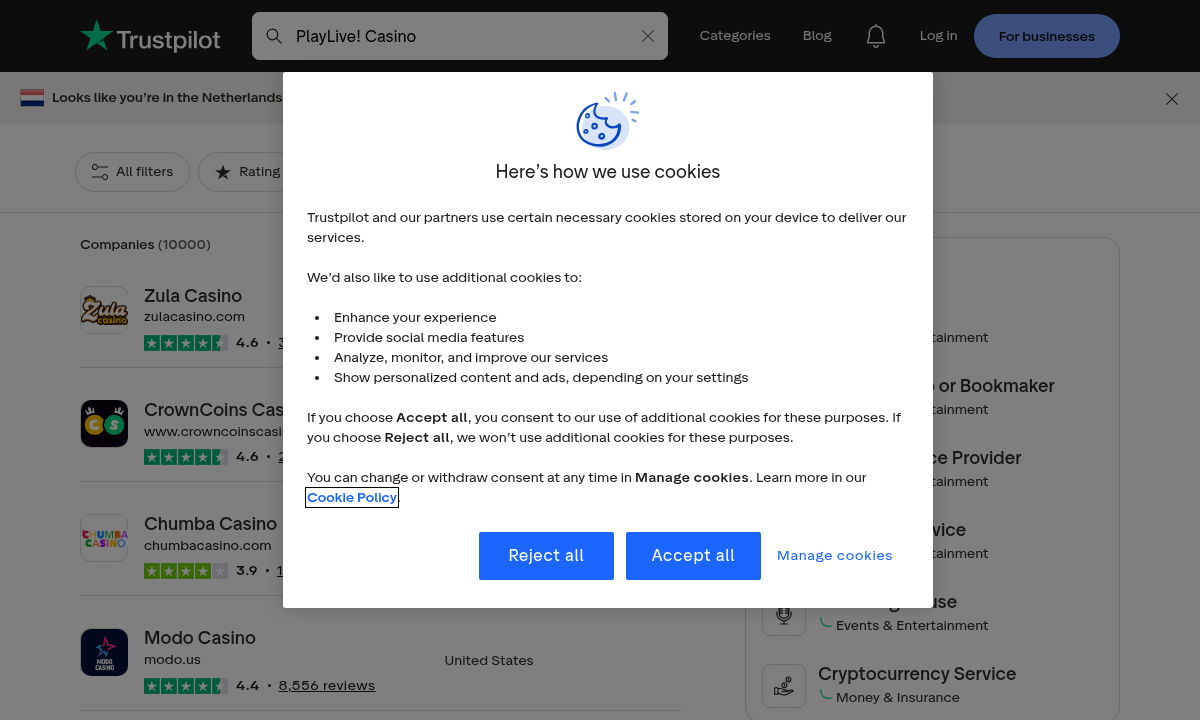
Conflicting reports should be converted into testable questions: Was there a transaction ID? Did the operator provide a final response? Does the timestamp align with the ledger? Was the person using the exact address? Without those links, a report remains context. The same caution applies to praise: a positive anecdote cannot prove universal payout performance.
Evidence chronology and evaluation method
The supplied authorization commenced August 14, 2020. On August 21, 2026, the Pennsylvania directory, Michigan guidance, New Jersey approved-site guidance, and user-context search surface were checked. Only the Pennsylvania primary record supports the green signal for the precise identity reviewed. The other state records explain why legality cannot be generalized across state lines, while the user-context source is excluded from the verdict.
The evaluation follows a hierarchy. Current regulator evidence receives primary weight. The supplied operator and address must match the regulated identity. User reports identify possible issues but cannot establish licensing or adjudicate a complaint. Unknown payment, withdrawal, and identity-check details remain unknown rather than being filled with industry assumptions.
Readers can inspect the broader evaluation methodology. Corrections should be submitted through contact and corrections with the disputed statement, a dated primary record, and enough detail to match the entity and address. New evidence may change a conclusion, but a screenshot without provenance, an undated claim, or a differently named entity is not sufficient by itself.
Frequently asked questions
Is PlayLive! Casino a scam or legitimate?
Current primary evidence supports the reviewed Pennsylvania service as a legitimate regulated operation, not an anonymous casino. The supplied record matches the service to Stadium Casino RE, LLC d/b/a Live! Casino Philadelphia and states that slots and table games were authorized beginning August 14, 2020. That finding does not resolve every customer dispute or authenticate a look-alike address.
What is the exact verified address?
The exact address supplied for verification is playlive.com. Check the complete browser address before signing in, depositing, or uploading identity documents. Added words, substituted characters, and different address endings should be treated as possible impersonation signs until independently verified.
Is the casino legal throughout the United States?
No nationwide conclusion is supported. The verified evidence establishes a Pennsylvania regulatory relationship. Michigan and New Jersey use their own authorization frameworks, illustrating why Pennsylvania status cannot be carried into another state automatically. Check the regulator for the state where play occurs.
Which payment and withdrawal methods are available?
The packet does not verify any specific deposit method, withdrawal method, fee, limit, minimum, or processing time. Review the cashier terms inside the verified service and save the terms that apply when a transaction is made. No deposit or withdrawal test was supplied.
What should I save for a disputed game round?
Save the session or round ID, game name, stake, exact time and time zone, balances before and after, original screenshots, and relevant account history. Ask the operator for the underlying game record and preserve its ticket number and response.
Where should an unresolved complaint go?
Start with the operator and request a specific remedy supported by identifiers and a concise chronology. If the matter remains unresolved, preserve the final response and confirm the correct state regulatory route. The supplied evidence does not establish a ruling on any individual complaint.