
Fanatics Casino: Legitimate or a Scam?
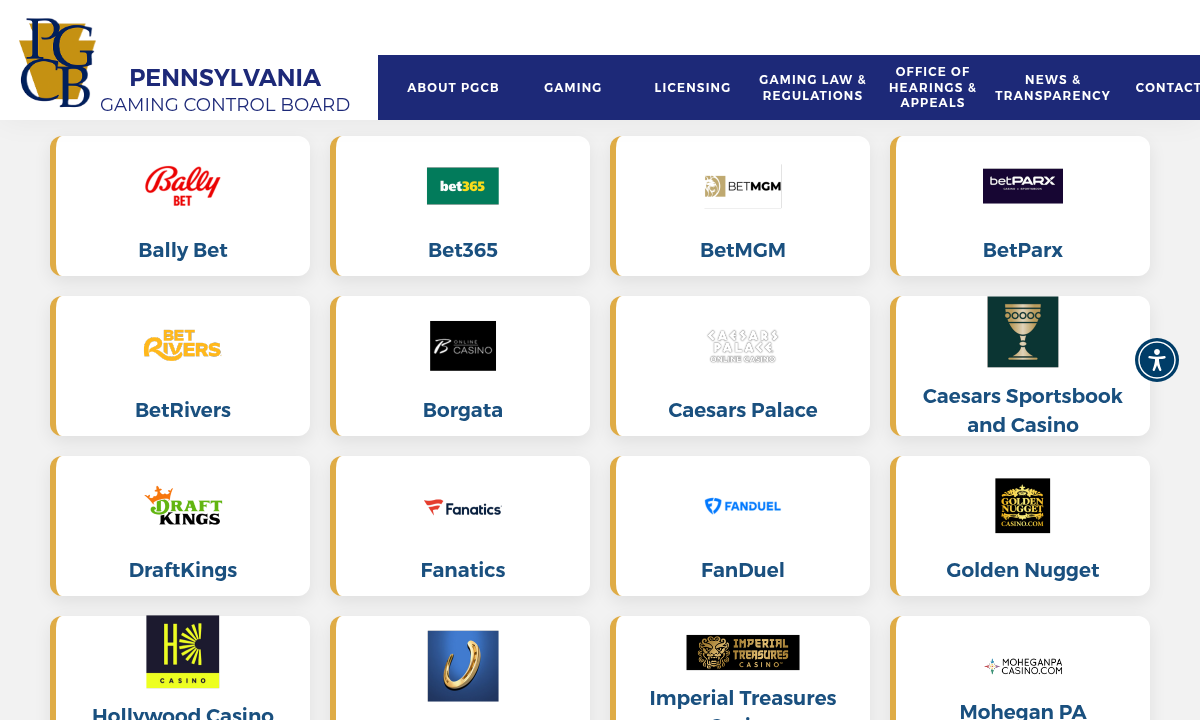
A withdrawal that arrives late or in several parts can look alarming, but timing alone does not establish fraud. Start by reconciling the amount requested, the amount approved, every transfer reference, the receiving bank account, and any remaining balance. The central identity check is equally precise: the verified Pennsylvania record supplied for this review connects casino.betfanatics.com with PointsBet Pennsylvania LLC d/b/a Fanatics under Hollywood Casino and records commencement on May 22, 2025.
The evidence signal is green for that narrow Pennsylvania authorization match. It is not a promise that every payment will be instant, every dispute will favor the customer, or the service is lawful in every state. No completed withdrawal test, payment-method inventory, processing-time schedule, KYC rule set, or complaint determination was supplied.

Evidence verdict: legitimate match, limited conclusion
For the precise Pennsylvania combination in the packet, Fanatics Casino is supported as a legitimate regulated service rather than an unidentified scam operation. The current primary record identifies the authorized casino website, the responsible business name, and the date operations commenced. Those three elements matter together because a familiar name by itself cannot establish authorization.
| Check | Verified result | What it establishes |
|---|---|---|
| Exact domain | casino.betfanatics.com | The hostname to compare before entering credentials or payment information |
| Named operator | PointsBet Pennsylvania LLC d/b/a Fanatics under Hollywood Casino | The business identity tied to the supplied Pennsylvania authorization |
| Status | PGCB-authorized casino website | Current primary support for the Pennsylvania service |
| Commencement | May 22, 2025 | The recorded start date supplied in the verified packet |
| Evidence check | August 21, 2026 | When the cited regulatory directory was checked |
The Pennsylvania Gaming Control Board’s interactive gaming operator directory presents the named brands it currently treats as regulated Pennsylvania interactive gaming operators. That is strong evidence for the listed Pennsylvania identity, but it cannot answer a separate question about another hostname, a copied advertisement, or availability in another jurisdiction.
The green signal therefore has boundaries. It covers the exact domain, operator, and Pennsylvania authorization match. It does not certify every promotion, payment event, support response, game outcome, or message claiming to represent the business.
Exact domain, operator, and authorization match
The safest identity check begins at the right side of the web address. The supplied hostname is casino.betfanatics.com. A lookalike that adds words, changes spelling, substitutes a different ending, or places the familiar phrase elsewhere in a longer address is not covered by the evidence reviewed here.
| Identity element | Expected value | Stop and verify when |
|---|---|---|
| Hostname | casino.betfanatics.com | Any character, suffix, or subdomain arrangement differs |
| Operator wording | PointsBet Pennsylvania LLC d/b/a Fanatics under Hollywood Casino | A payment or KYC notice names an unexplained company |
| Regulator context | Pennsylvania Gaming Control Board authorization | A claim relies only on a badge, advertisement, or social post |
| Start date | May 22, 2025 | A supposed record gives a conflicting date without explanation |
The legal name is longer than the customer-facing name because it includes both the limited liability company and the “doing business as” wording. That difference is not inherently suspicious. It becomes important when reconciling account notices, tax documents, payment descriptors, or a complaint: the customer-facing name and legal operator should form a traceable chain rather than appear as unrelated identities.
Is it a scam, and where does the green signal stop?
The verified packet does not support calling the identified Pennsylvania operation a scam. A competent primary source supports its regulated status, while no official adverse finding or corroborated documented fraud evidence was supplied. That makes green appropriate for identity and authorization, not for every broader quality or safety claim.
A delayed withdrawal is an unresolved transaction until records explain it. A rejected promotion may concern eligibility terms. A frozen account may involve identity checks, location controls, account security, or another cause that cannot be determined from the packet. None should automatically be converted into a fraud finding, and none should be dismissed without examining records.
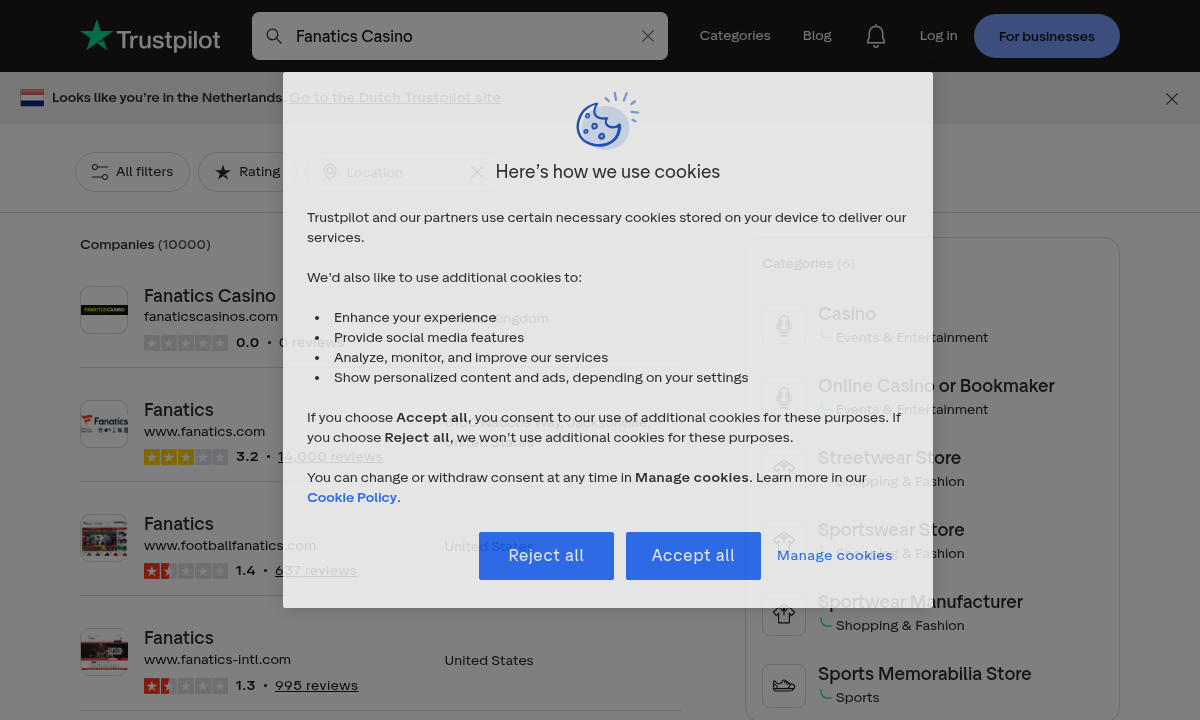
User-review search results were captured only as context. They can indicate topics worth investigating, but they do not prove an allegation, establish the outcome of a complaint, or override a regulator record. No individual user claim from that search surface is adopted as fact here.
Is the service legal where you are?
Pennsylvania authorization does not create nationwide legality. Internet casino availability is state-specific, and the packet contains no basis for claiming that the service may accept real-money casino play from every United States location. The practical question is not merely whether the name is regulated somewhere, but whether the exact service is authorized for the state where the customer is physically located.
Michigan explains the distinction between authorized providers and businesses that have received enforcement correspondence on its legal-versus-illegal gaming resource. New Jersey likewise states that services absent from its approved internet gaming list are not approved to offer internet gaming there. These records demonstrate the need for a state-specific check; they do not establish a Michigan or New Jersey status for this operator in the absence of a supplied exact match.
| Location question | Reliable approach | Unsupported shortcut |
|---|---|---|
| Pennsylvania | Match the exact website and operator in the current PGCB directory | Assuming a familiar name is enough |
| Michigan | Check the current MGCB authorized-provider material | Treating Pennsylvania approval as transferable |
| New Jersey | Check the current NJDGE approved-site list | Assuming nationwide approval |
| Any other state | Consult that state’s competent regulator | Relying on search advertisements or review ratings |
If the state list, hostname, and operator identity do not align, do not deposit while the discrepancy remains unresolved. The state license checks guide provides a repeatable verification process.
Payments and bank reconciliation
No verified list of deposit methods, withdrawal rails, minimums, maximums, fees, or processing times was included. It would therefore be unsafe to promise support for a particular card, bank transfer, wallet, or instant withdrawal. Check the options and terms displayed inside the authenticated account before committing funds, and preserve the version presented when the transaction is initiated.
For a partial or delayed transfer, build a reconciliation record rather than relying on a single balance screenshot. Record the requested amount, request time, internal transaction identifier, approved amount, each external transfer reference, each amount received, and the unresolved difference. A withdrawal may be divided into multiple credits, but that possibility must be confirmed from actual transaction records rather than assumed.
| Reconciliation field | Record precisely | Why it matters |
|---|---|---|
| Withdrawal request | Amount, date, time, and account identifier | Establishes the starting instruction |
| Operator status | Pending, approved, canceled, or completed | Distinguishes review from claimed dispatch |
| Transfer reference | Every confirmation or trace number | Helps the bank locate a payment |
| Bank posting | Amount, date, description, and account suffix | Shows what actually arrived |
| Difference | Requested total minus received total | Defines the unresolved amount |
| Contact history | Case numbers, dates, and responses | Creates an escalation trail |
Do not send full bank credentials, passwords, or one-time security codes in an ordinary support message. Redact unrelated transactions when a statement is requested, unless a competent authority lawfully requires more. Additional preparation steps appear in payment checks.
Withdrawals: references before conclusions
When the account says “completed” but the bank shows nothing, request the payment rail, dispatch date, amount, and trace or reference number. Then ask the receiving bank to search using that information. A generic statement that money was sent is less useful than a reference the bank can trace.
If only part arrives, reconcile each credit separately. Do not close the case merely because one matching descriptor appears. Conversely, do not count a split payment as missing if the combined credits equal the approved total. Currency conversion, bank fees, reversals, and duplicate requests can affect the comparison, but none is documented in the supplied evidence and each must be established from the customer’s own records.
Escalate in stages: preserve the transaction history, contact operator support, obtain a case number, ask the bank to trace the reference, and submit a regulator complaint if a material discrepancy remains. State the amount still disputed and attach a concise chronology. Avoid claiming theft or criminal conduct unless a competent finding supports that language.
No first-hand withdrawal test was supplied. There is consequently no evidence-based withdrawal speed rating, no verified average approval time, and no basis for saying the operator consistently pays faster or slower than competitors.
Identity verification and account controls
The packet does not provide the operator’s current KYC document list, review times, age-verification procedure, geolocation rules, source-of-funds process, or account-lock criteria. Identity checks are plausible in regulated gambling, but the exact request must be assessed from the authenticated account and current terms rather than reconstructed from assumptions.
Before uploading a document, confirm the hostname, enter through a trusted route, and verify that the request appears in the secured account or an established support thread. Be cautious when an unsolicited message asks for a password, one-time code, remote access, cryptocurrency, gift cards, or payment to “release” a withdrawal. None of those demands is validated by the authorization record.
Keep copies of the request, the document category submitted, submission time, and confirmation. Where practical, obscure information not requested, while leaving the fields needed for verification visible. If support asks for a new category of sensitive information, request the reason and secure submission method. Never alter a document or provide false identity information.
Account restrictions and document reviews do not by themselves prove a scam. They also do not eliminate the operator’s obligation to explain what remains outstanding through its support and complaint channels.
Clone and impersonation checks
A clone can reproduce colors, wording, or imagery while using a different hostname. Regulatory evidence attaches to the recorded legal and technical identity, not to visual resemblance. Check the complete address before signing in, depositing, following a verification link, or installing software.
- Compare the hostname character by character with
casino.betfanatics.com. - Reject addresses that add misspellings, unrelated prefixes, unusual endings, or deceptive punctuation.
- Check that the account and payment notice identify the expected operator or explain any payment processor.
- Avoid links delivered through unsolicited direct messages or paid posts when the destination cannot be verified.
- Treat copied regulator seals as claims until confirmed in the regulator’s own directory.
- Save the suspicious address and message without entering credentials.
A valid authorization for the genuine service does not protect a customer who sends money or documents to an imitator. Report suspected impersonation through established support and preserve the full address, sender details, time, and screenshots. Do not make the suspicious address clickable when sharing it publicly.
The only commercial route included here is the internally controlled destination: See the regulated play route. Confirm the displayed hostname again before entering account information.
Complaints and unresolved disputes
Begin with a short factual notice to customer support. Include the account identifier needed to locate the transaction, the date, disputed amount, status shown, transfer references, and the remedy requested. Ask for a case number and a written response. A clear request such as “trace the missing $X balance or explain the disposition” is more actionable than a broad accusation.
If the bank is involved, ask whether it can locate the transfer using the supplied trace number and whether the credit was rejected, returned, or posted under another descriptor. Preserve the bank’s response. When escalating to a regulator, separate what the account displayed, what support stated, what the bank found, and what remains unknown.
Use the complaints and scam warnings guide to structure the record. For corrections to factual material here, use contact and corrections. Do not publish unredacted identification documents, full account numbers, home addresses, or security credentials as part of a public complaint.
The supplied evidence contains no adjudicated complaint against the identified operation. It also contains no evidence that every customer issue has been resolved. The correct conclusion is narrower: authorization is supported, while any individual payment or account dispute requires its own records and outcome.
Evidence chronology, method, and open questions
The chronology starts with the recorded Pennsylvania commencement date of May 22, 2025. On August 21, 2026, the PGCB operator directory, Michigan regulatory guidance, New Jersey approved-site material, and contextual user-review search surface were checked. Primary regulatory records determine authorization conclusions; user context only identifies possible topics and cannot prove allegations.
The method matches four elements where evidence permits: exact hostname, legal operator, jurisdiction, and current regulatory presentation. It then separates authorization from service-quality questions. A green result is assigned only to the supported identity and status. Payment performance, withdrawal speed, KYC execution, and complaint outcomes remain ungraded when no verified test or competent finding exists. More detail is available in the review methodology.
Open questions include the current payment-method menu, deposit and withdrawal limits, fees, processing windows, document requirements, geolocation controls, and the outcome of any individual complaint. No license expiration date was supplied. These items should not be inferred from another operator, another state, an advertisement, or an undated customer comment.
A correction should identify the exact disputed statement and provide a current competent record, dated operator communication, or transaction evidence. Material changes to the hostname, operator identity, or regulator listing require a fresh status review rather than a silent assumption that the earlier result still applies.
Frequently asked questions
Is Fanatics Casino legitimate or a scam?
The supplied current primary record supports the exact Pennsylvania service at casino.betfanatics.com as a PGCB-authorized casino website operated by PointsBet Pennsylvania LLC d/b/a Fanatics under Hollywood Casino. No official adverse finding or corroborated fraud evidence was supplied. The green signal applies to that identity and authorization match, not to every payment, promotion, or support interaction.
Is the casino legal throughout the United States?
No nationwide conclusion is supported. The verified match concerns Pennsylvania. Internet casino authorization is state-specific, so customers must confirm the exact website and operator with the competent regulator for the state where they are physically located.
What should I do if only part of my withdrawal arrives?
Reconcile the requested amount against every received credit, then request each transfer reference and dispatch date from support. Ask the receiving bank to trace those references, preserve the case number and bank response, and escalate the remaining documented difference if it is not resolved.
How can I recognize a cloned website?
Compare the full hostname character by character with casino.betfanatics.com. A copied design, familiar name, regulator seal, advertisement, or social profile does not prove identity. Do not enter credentials or payment data when the hostname or operator wording differs.
Does a request for identity documents mean the operation is fraudulent?
Not by itself. Regulated gambling accounts may require identity checks, but the packet does not establish the current document list or procedure. Confirm the request inside the authenticated account, use a secure submission route, and never provide passwords, one-time codes, remote access, or false documents.
Are fast withdrawals or specific payment methods verified?
No. The evidence packet contains no completed withdrawal test, supported-method inventory, fee schedule, limits, or processing-time data. Treat any payment option or timing displayed in the account as current only for that transaction and retain a copy of the applicable terms.