
Is Caesars Sportsbook & Casino Legit? Host and Licence Check

Start with the lookalike-domain test
The first question is not whether a familiar name appears on a page. It is whether the browser is using the exact host recorded for the service. The verified host supplied for this review is sportsbook.caesars.com. That is a specific subdomain under caesars.com, not a spelling variation, a hyphenated imitation or a different top-level domain.
A clone can copy colors, wording, account screens and promotional language while sending login details or payment information somewhere else. A page that calls itself Caesars Sportsbook & Casino is therefore not enough to establish that it is the verified service. Before entering an email address, password, identity document or card number, read the address bar character by character. Watch for extra words, substituted letters, unusual punctuation, a different ending such as .net, or a hostname that merely contains the brand name.
| Check | Verified value | What a mismatch means |
|---|---|---|
| Host | sportsbook.caesars.com | Treat a different host as unverified |
| Brand reference | Caesars Sportsbook & Casino | A copied name does not prove connection |
| Recorded operator | Chester Downs and Marina, LLC d/b/a Harrah’s Philadelphia | A different operator needs separate evidence |
| Pennsylvania authority | PGCB-authorized slots and table games | The wording does not establish approval in every state |
Use a saved bookmark or type the host yourself rather than following an unexpected message link. A secure connection indicator is useful, but it does not prove that the business behind a site is authorized. The host, operator and relevant state record must be considered together.
What the primary record supports
The supplied primary record from the Pennsylvania Gaming Control Board (PGCB), checked on August 21, 2026, presents 24 named brands as currently regulated Pennsylvania interactive gaming operators. The evidence packet identifies the relevant licence description as “PGCB-authorized slots and table games.” It also identifies the operator as Chester Downs and Marina, LLC d/b/a Harrah’s Philadelphia.
That is the basis for the green signal in this dossier: current primary evidence supports the stated Pennsylvania authorization context for the identified service and operator record. It does not mean that every website using the Caesars name is genuine, that every product is available in every jurisdiction, or that a user will receive a particular payment or support outcome.
The record should be read narrowly. It supports a regulated Pennsylvania interactive-gaming context, not a nationwide conclusion. The packet gives no licence-expiry date, so no expiry date is stated here. It also gives no separate finding about a particular account, withdrawal, promotion, game result or customer complaint.

The linked PGCB interactive gaming operator directory is the primary source context supplied for this conclusion. Its role is to establish the authority record described above, not to validate an unrelated clone host.
Host, operator and licence must match
A legitimate-service assessment has three connected parts. First, identify the host that a user is actually visiting. Second, identify the legal operator associated with the relevant market record. Third, check whether the authority applies to the product and location being considered.
| Evidence layer | Supplied result | Safe interpretation |
|---|---|---|
| Exact host | sportsbook.caesars.com | The host to compare with a browser address bar |
| Entity record | Chester Downs and Marina, LLC d/b/a Harrah’s Philadelphia | The named operator supplied for this dossier |
| Authority | PGCB-authorized slots and table games | Pennsylvania authorization evidence for the stated activity |
| Expiry | Not supplied | Do not invent or assume an expiry date |
| Other states | Not established by the packet | Perform a state-specific check before relying on availability |
A brand name and a legal entity are not interchangeable. Marketing may use a consumer-facing name while the regulator records an entity under a formal business name. Conversely, a scammer can copy the consumer-facing name without being connected to the recorded operator. That is why a host comparison alone is useful but incomplete, and why an operator record alone does not authenticate a page that a user has opened.
The evidence packet does not provide a corporate ownership chain, a registration date for the host, a technical certificate record, or a state-by-state authorization list. Those are unknowns rather than negative findings. They should not be filled with assumptions from the brand name.
Is it a scam or legit?
On the supplied evidence, the precise Pennsylvania service and host are supported by a current primary authorization record, so the signal is green. “Legit” here means that the verified host and named operator have a supported Pennsylvania regulatory connection in the supplied record. It does not mean that every claim made in an advertisement is accurate or that every customer experience is positive.
The scam question changes if the host changes. A page at a lookalike domain is not covered by the primary record merely because it displays a familiar logo. The same caution applies to search advertisements, social posts, messages and app-install links. Compare the address before login, not after a problem has occurred.
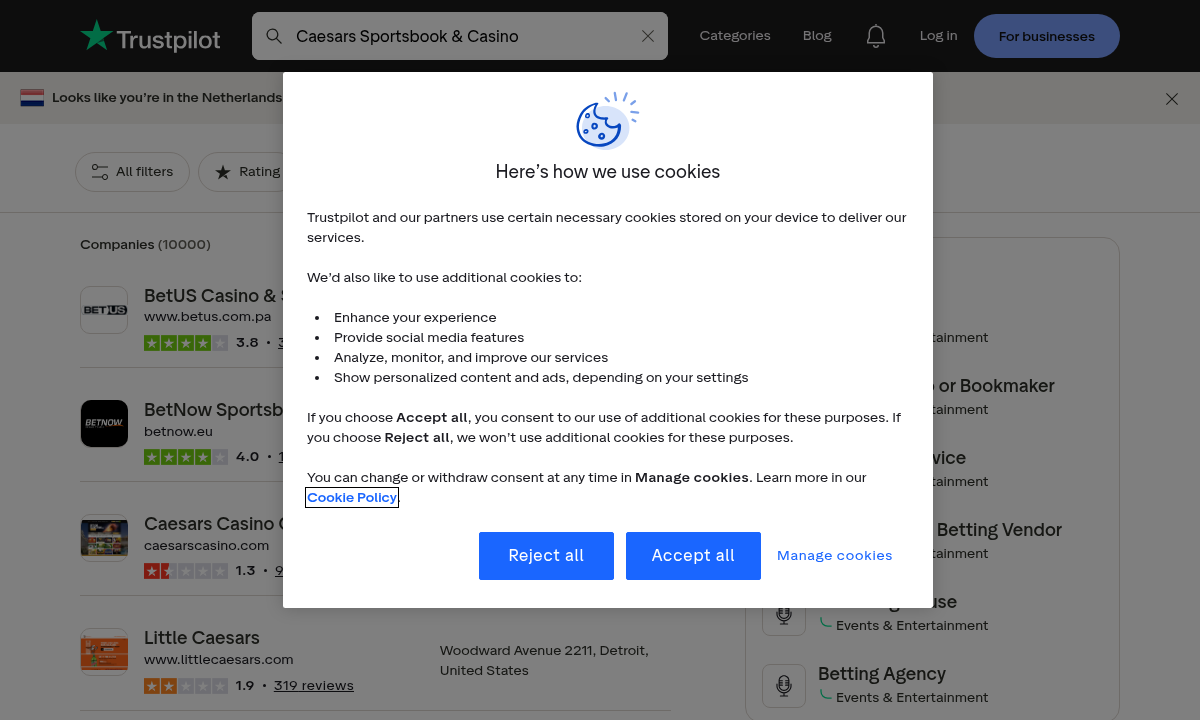
The packet includes a dated independent search surface containing user-review profiles. That material is contextual only. It does not prove an allegation, a safety outcome, a licence, a complaint finding or a withdrawal result. User reports can point to questions worth documenting, but they do not replace a regulator’s record.
For a wider legal check, Michigan’s legal-versus-illegal gaming guidance distinguishes authorized providers from operators receiving cease-and-desist letters. New Jersey’s approved internet-gaming sites information states that sites absent from its approved list are not approved to offer internet gaming in that state. Neither source turns the Pennsylvania record into approval for another jurisdiction.
Login exposure and clone-domain defence
Login details are among the most valuable targets for a copied site. A convincing page may ask for a username, password, one-time code or identity document before a visitor notices the address mismatch. Do not reuse a password from another service. If a suspicious page has already received credentials, change the affected password through the verified host and change it anywhere else it was reused. Do not continue a recovery conversation through an unverified message account.
| Warning sign | Why it matters | Safer response |
|---|---|---|
| Host differs by one letter | Imitation domains can look familiar at a glance | Stop and compare every character |
| Brand appears in a new domain ending | The name alone does not establish authorization | Verify the exact host and state record |
| Unexpected urgency about a login or payment | Pressure reduces time for checking | Close the message and navigate independently |
| Request to send credentials by message | Credentials should not be disclosed in an informal channel | Use the verified service’s support route |
| Payment page redirects to an unfamiliar host | Card details may be exposed to an unrelated party | Stop before submitting information |
Save the full address, time, message, screen and payment reference if something looks wrong. Do not upload those materials to a public review as though they prove a legal finding. They are useful for a targeted report or correction request, especially when the exact host is preserved.
Payments and withdrawals: what is and is not verified
The packet does not identify supported payment methods, minimum or maximum deposits, processing times, fees, withdrawal limits, wagering conditions, reversal rules or a completed withdrawal test. None of those details can be presented as verified features. A payment guide that lists a card, wallet or transfer method without a supplied record would create a false impression of certainty.
Before depositing, read the terms displayed on the verified service and confirm that the account name, payment instrument and jurisdiction requirements apply to you. Keep the transaction reference, amount, date and confirmation screen. Do not send money to a personal account or respond to a request that moves the transaction outside the verified service.
| Payment question | Evidence status | What to record yourself |
|---|---|---|
| Which methods are accepted? | Not supplied | The method name shown at checkout |
| How long will a withdrawal take? | Not supplied | Request time, status changes and final result |
| Are fees charged? | Not supplied | The fee disclosure before confirmation |
| Is a withdrawal test available? | Not supplied | No completed test is established here |
| Are bonus conditions relevant? | Not supplied | The terms attached to the specific offer |
A delayed withdrawal is not, by itself, proof of fraud. It may involve verification, a limit, a payment-provider issue or a terms question; the packet does not identify which explanation applies. Conversely, a regulated operator record does not guarantee that a particular transaction will be completed without delay. Separate the authority question from the transaction record.
KYC, identity checks and account recovery
No KYC procedure, document list, verification deadline or account-recovery outcome is supplied. The only safe conclusion is that this dossier cannot confirm the exact identity checks used for an account. If the verified service requests identity information, inspect the request within the verified host and follow the instructions shown there rather than sending documents to a lookalike address.
Use clear records when asking for help: the account email or username, relevant dates, transaction references, the exact host, and a concise description of the issue. Avoid sharing a full password, one-time code or unnecessary identity data in an unsolicited channel. If an account is locked, do not create multiple replacement accounts to work around the problem unless the service explicitly permits that action; the packet supplies no rule on this point, so the prudent step is to seek an official account-recovery route.
The absence of supplied KYC detail is an evidence limit, not proof that checks are absent or excessive. It also means that no claim can be made here about how quickly a user will be verified or whether a particular document will be accepted.
Complaints, adverse records and recovery steps
The supplied sources do not establish a complaint finding, an adverse enforcement action, a successful recovery, or a failed withdrawal connected to the identified host and operator. The user-review search surface is expressly contextual and cannot convert an individual allegation into a finding. Keep that distinction when describing a problem to a regulator, payment provider or support team.
- Stop using a suspicious host and preserve its complete address.
- Secure reused credentials through the verified host and relevant account providers.
- Record deposits, withdrawals, dates, reference numbers and support correspondence.
- Ask the service for a written explanation using its verified support route.
- If the issue concerns authorization, compare the relevant state regulator’s approved list or guidance.
- If money or identity information may be exposed, contact the payment provider or appropriate authorities using independently verified contact details.
Do not describe an allegation as a proven scam unless a competent dated record establishes that conclusion. The supplied evidence supports a Pennsylvania authorization signal, but it does not adjudicate an individual dispute. For site-level issues, the relevant internal route is complaints and scam warnings. For a factual error in this dossier, use contact and corrections.
Evidence chronology and method
The supplied records were checked on August 21, 2026. The chronology is deliberately short because the packet contains one current primary regulatory record, one user-context search surface and two additional primary state-information sources. The PGCB directory supports the Pennsylvania operator context. The independent review search surface supplies context only. Michigan and New Jersey materials explain state-specific distinctions between authorized and unauthorized internet gaming; they do not establish approval for the identified host in those states.
| Date checked | Source role | What it contributes | What it cannot establish |
|---|---|---|---|
| August 21, 2026 | Primary, PGCB | Current Pennsylvania regulated-operator presentation | Nationwide approval or transaction performance |
| August 21, 2026 | User context | Dated search surface for user-review profiles | Truth of allegations or complaint outcomes |
| August 21, 2026 | Primary, Michigan | Authorized-provider and cease-and-desist distinction | Pennsylvania operator status |
| August 21, 2026 | Primary, New Jersey | Approved-list principle for internet gaming | Approval of every state or host |
The method is claim matching, not reputation aggregation. The host is compared with the supplied exact domain; the operator and authority are kept separate; primary records receive more weight than user context; and unsupported payment, KYC and withdrawal claims remain unknown. A green signal is used only because current primary evidence supports the precise Pennsylvania host and entity context supplied here. It is not a promise of safety, profit, availability or a particular account result.
What to check before using the service
| Step | Question | Stop condition |
|---|---|---|
| 1 | Does the address bar show sportsbook.caesars.com exactly? | Any added, missing or substituted character |
| 2 | Does the state context match where you are located? | The evidence is being used as nationwide approval |
| 3 | Does the operator information align with the supplied record? | An unexplained different entity appears |
| 4 | Are payment and withdrawal terms visible before deposit? | You cannot identify the applicable terms |
| 5 | Can you preserve a transaction reference? | The payment request is informal or untraceable |
| 6 | Is support reached through the verified service? | The contact came from an unverified message |
For comparisons with other reviewed operators, use the casino review index, and for the regulatory question use state licence checks. These internal routes do not replace checking the exact host and the applicable state record.
If the host and state conditions match the evidence described here, the supplied primary record supports the green signal. If the host does not match, treat the page as unverified even if its design is identical. If a new official adverse record appears, the assessment should be revisited rather than defended by relying on an older conclusion.
Bottom line
The verified packet supports a current Pennsylvania regulatory connection for sportsbook.caesars.com and the operator Chester Downs and Marina, LLC d/b/a Harrah’s Philadelphia, with authorization described as PGCB-authorized slots and table games. That supports a green signal for the precise host-and-operator match in the stated Pennsylvania context.
The conclusion is narrower than a blanket “safe everywhere” statement. The packet does not provide a licence-expiry date, payment menu, withdrawal test, KYC rules, complaint outcome or nationwide authorization. User-review material is contextual and does not prove allegations. The strongest defence against a clone remains exact-host checking, independent state verification and careful preservation of payment and account records.
If you choose to proceed, use the verified route only: See the regulated play route.
FAQ
Is Caesars Sportsbook & Casino a scam or legitimate?
The supplied current primary record supports a legitimate Pennsylvania regulatory connection for the exact host `sportsbook.caesars.com` and the named operator. That does not authenticate lookalike domains or prove every user outcome.
What is the verified host?
The verified host supplied for this dossier is `sportsbook.caesars.com`. Compare it character by character with the address shown before entering login, identity or payment information.
Who is the operator?
The supplied operator record names Chester Downs and Marina, LLC d/b/a Harrah’s Philadelphia. A different entity shown on a page requires separate verification.
What licence is supported by the evidence?
The packet describes the authority as PGCB-authorized slots and table games. No licence-expiry date is supplied, and the evidence does not establish approval in every state.
Are payments and withdrawals verified here?
No. The packet supplies no payment-method list, processing time, fee schedule, withdrawal limit or completed withdrawal test. Those details remain unknown in this dossier.
What should I do if I used a clone domain?
Stop using it, preserve the complete address and relevant records, change any reused credentials through the verified service, and contact the appropriate payment provider or authorities through independently verified channels. Do not treat a user allegation as a proven legal finding.