
BetMGM Pennsylvania Casino: A Withdrawal Casebook and Licence Check
A constructed withdrawal file, and why it opens the case
Nothing separates a state-licensed Pennsylvania casino from an unlicensed lookalike as sharply as a stalled cashout. The file below is constructed, not observed: no deposit was funded, no withdrawal was requested and no payout speed was measured. It is set out because a withdrawal dispute is the moment a player needs three things at once — the exact hostname the money moved through, the licensed entity named against the brand in the regulator's own directory, and dated captures taken before any support ticket is opened.
In the constructed file, a player in Allegheny County deposits on the Pennsylvania host, plays slots for a week, reaches a four-figure balance and requests a cashout on a Friday evening. The request shows as pending. On Saturday the account asks for identity documents. Nothing has gone wrong yet. What decides whether this ends as a routine verification hold or a genuine grievance is evidentiary: whether the address bar showed the exact regulated property, whether the brand was listed by the state regulator on the day of play, and whether the cashier confirmation, request reference and timestamps were kept.
| Stage in the constructed file | What the player sees | Artifact worth keeping | What it would establish |
|---|---|---|---|
| Day 0 — deposit | Cashier confirms funds on the Pennsylvania host | Full address bar plus deposit receipt | Money moved through the licensed property, not a lookalike |
| Day 3 — win | Balance rises after slot play | Game history export or screen capture | The balance has a traceable origin in the account |
| Day 5 — cashout request | Request shown as pending with a reference | Reference, amount and timestamp | A specific, datable request exists |
| Day 6 — document request | Identity paperwork requested | Requested list and upload confirmations | The hold has a stated cause and a compliance date |
| Day 9 — no movement | Status unchanged | Support transcript with ticket ID | The operator was contacted first |
| Day 12 — escalation | Regulator filing prepared | The full bundle above | The grievance is documented, not asserted |
The day numbers are scaffolding for the sequence, not a service expectation. No verified processing time for the operator sits in the accepted record, so treat any figure quoted elsewhere as unconfirmed.
Host, operator and licence match

The regulated property under review is the Pennsylvania host casino.pa.betmgm.com. The accepted record names BetMGM, LLC operating under Hollywood Casino at Penn National Race Course, with interactive authorization covering slots, table games and poker. Brand, hostname, named licensee and licence categories have to line up together; a brand name on its own proves nothing, because a name is the easiest thing for a copycat to reuse.
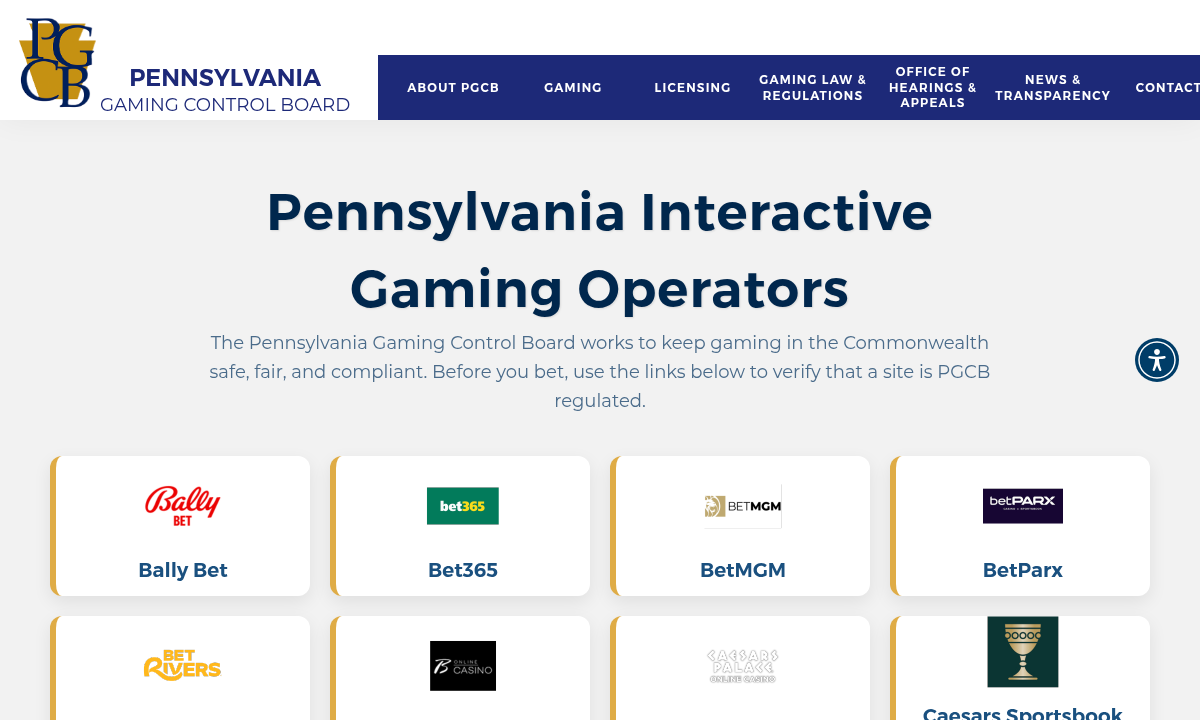
The Pennsylvania Gaming Control Board maintains its own directory of interactive gaming operators, and on 21 August 2026 that directory presented 24 named brands as regulated Pennsylvania interactive operators, this one among them. The check takes under a minute against the board's directory of interactive gaming operators. No licence expiry date is supplied in the record, so the accurate reading is "listed as current on the date checked" rather than "licensed indefinitely".
| Element | Accepted record | How to confirm it yourself | Status |
|---|---|---|---|
| Exact hostname | casino.pa.betmgm.com | Read the full address before logging in | In record |
| Brand as listed | BetMGM | Find the brand in the PGCB interactive operator directory | Primary, checked 21 Aug 2026 |
| Named operating entity | BetMGM, LLC | Compare the directory row with the site footer | In record |
| Land-based licence host | Hollywood Casino at Penn National Race Course | Same directory row | In record |
| Authorized verticals | Slots, table games, poker | Directory categories | In record |
| Licence expiry | Not supplied | Re-check the directory each visit | Unknown |
| Independent withdrawal test | None exists | — | Unknown |
Two free checks add confidence: compare the operating entity named in the site footer with the entity in the directory row, and confirm the state segment inside the hostname before logging in. Our state licence checks keep the same order for every property.
Scam or legitimate: what the primary record settles
Asked plainly, the strongest routine signal available to a player is a current listing by the state's own gaming regulator, and it is present for the Pennsylvania property. That is why the rating here is green and why it rests on current primary evidence rather than on advertising volume or a star score. A green rating describes regulatory status for one hostname on one date.
It does not say that every dispute resolves in the player's favour, that a bonus term is reasonable, or that a cashout will land inside any particular window. No payout test, no bonus-terms audit and no adjudicated complaint stands behind it. A licensed operator can still impose a frustrating hold, and an unlicensed one can pay promptly for a while.
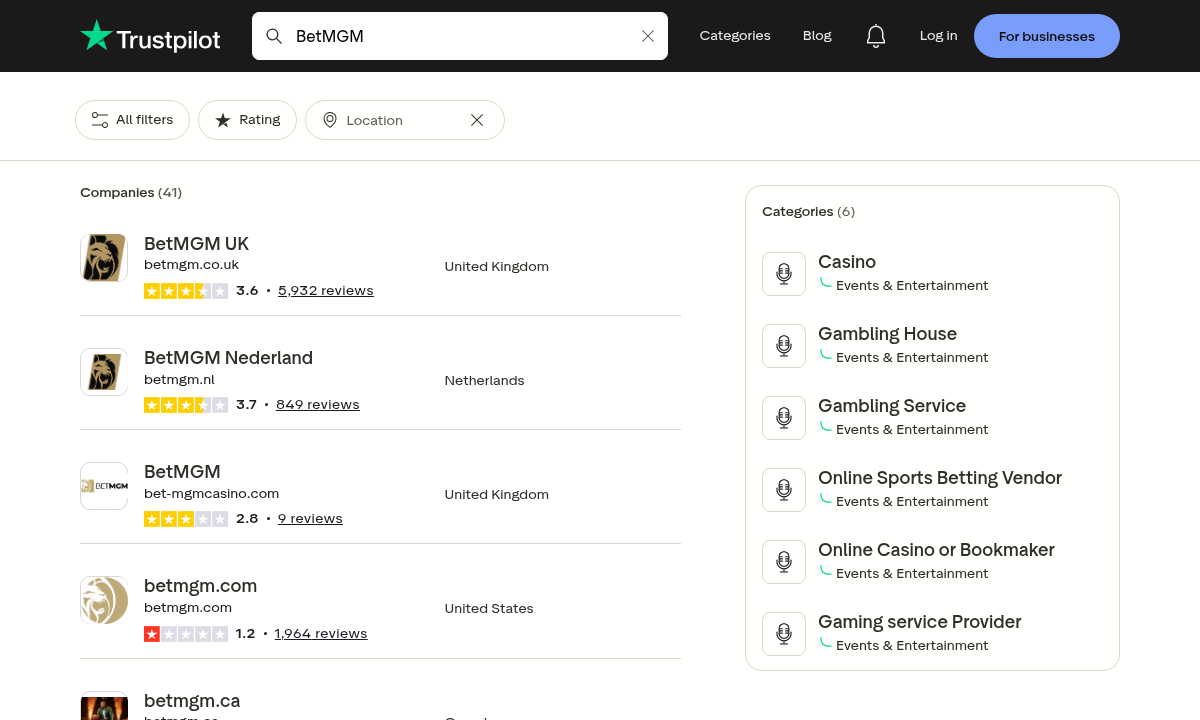
A dated independent search surface for user-review profiles mentioning the brand was captured as context on 21 August 2026. It stays context: a search listing shows that opinions exist, and establishes no allegation, safety outcome, licence status or complaint finding.
If the checks above match what you see on screen, the cashier can be reached through our See the regulated play route, and the hostname is worth reading once the page loads.
Legal or not: the hostname tells you which state
Online casino authorization in the United States is granted state by state, so the useful question is "legal where". The pa segment inside the hostname is the practical tell: it points at the Pennsylvania-facing property covered by the authorization in the record, and it supports no conclusion about any other jurisdiction.
Two further records show how that line is enforced elsewhere. New Jersey states that sites absent from its approved list are not approved to offer internet gaming in the state, as set out in its internet gaming sites list. Michigan separates its authorized provider list from operators that have received cease-and-desist letters in its legal versus illegal gaming guidance. Neither record is a statement about this brand; both are the yardstick to apply within their own state.
Deposits and the cashier: verifiable versus unknown
The accepted record contains no deposit or withdrawal method list, no minimum or maximum amounts and no fee schedule for the Pennsylvania property, so none are stated. Payment details age quickly, and repeating an unverified list is how a review becomes wrong quietly.
What can be verified is procedural, and any account holder can do it in minutes: confirm the hostname, read the withdrawal part of the cashier rather than the deposit part, note whether the method used to fund the account is also offered for cashouts, and capture any stated processing window with its date. Our payment verification checks set out that routine in a repeatable order.
The withdrawal casebook: artifacts that decide disputes
Back to the constructed file. What turns a grievance into something a regulator can review is not forceful wording but a complete record. Held-cashout complaints usually fail for the same three reasons: the player cannot show which host was used, cannot show when the request was made, and cannot show what was asked for and when it was supplied.
| Artifact | Where it comes from | Why it carries weight |
|---|---|---|
| Hostname capture | Address bar at the moment of play | Ties the session to the licensed property |
| Withdrawal receipt | Cashier confirmation screen | Fixes the amount, reference and time of the request |
| Document request wording | Account message or email | Shows exactly what was demanded, and when |
| Upload confirmations | Verification area of the account | Shows the demand was met, and on what date |
| Support transcript | Live chat or ticket history | Records what the operator said and promised |
| Transaction history | Account statement export | Reconciles deposits, wagers and pending amounts |
Keep the bundle in one dated folder, in date order, before contacting anyone. A complaint remains an allegation until a competent authority records a finding, and documents are what make a finding possible.
Identity verification and the hold that follows
Verification is where most cashout frustration starts, and it is also where the accepted record is thinnest: no document list, verification window or hold policy for the operator was supplied, so none is asserted. What is structural can be said — a regulated Pennsylvania property works under state compliance obligations, and identity and payment-source checks belong to that framework rather than signalling bad faith.
The practical posture is to finish verification before the first withdrawal request rather than during it, keep the name on the payment method identical to the account name, and answer each document request once and completely, capturing the upload confirmation. If the same request repeats, ask in writing which specific item is still outstanding and keep the reply.
Escalation: the operator first, the regulator second
| Step | Where it goes | What to include | What it can and cannot do |
|---|---|---|---|
| 1 | Operator support on the Pennsylvania host | Account name, request reference, amount, dates, uploads | Produces the ticket ID and transcript later steps rely on |
| 2 | The operator's formal complaint process | The first ticket ID and the outcome sought | Creates a dated record that the issue was raised properly |
| 3 | Pennsylvania Gaming Control Board | The full artifact bundle and a factual timeline | Can review a licensee; only a competent record turns an allegation into a finding |
| 4 | The regulator of the state actually played in | Proof of the host and state used | Authorization is per state, so the right regulator follows the property |
| 5 | Public review posting | Only what documents support | Adds visibility, settles nothing, compels no payment |
Order matters. The operator step produces the ticket identifiers and transcript a later filing depends on, and skipping it leaves a complaint with nothing dated to point at. Patterns worth reporting are collected in our complaints and scam warnings. If a held balance is affecting more than a bankroll, our responsible gambling resources and urgent help routes come first.
Clone, typo and redirect checks
Copycats rely on players recognising a colour scheme faster than they read a string of characters, so the protection is deliberately boring: read the whole address, left to right, every time.
- Confirm the state segment and the ending of the hostname before entering credentials, on desktop and on mobile.
- Treat extra words, hyphens or an alternative ending as a stop signal rather than a mirror or a newer version.
- Arrive from a typed address or a saved bookmark instead of a search advertisement or a message link.
- Check the publisher name on any mobile app listing and compare it with the entity in the regulator's directory row.
- If a password manager refuses to autofill on a page claiming to be the casino, believe the password manager.
- Capture the final address after any redirect chain, and end any chat that asks for a password, a card PIN or remote access.
Risks, limits and open questions
- Licence expiry is not in the accepted record, so the listing is confirmed as current only for 21 August 2026.
- No payout-speed test, bonus-terms review or adjudicated dispute stands behind the green rating.
- Methods, limits and fees are unverified here and can change without notice.
- The user-review search surface carries no evidential weight for or against the operator.
- Regulator directories are edited over time, and re-checking the row before depositing is on the player.
- The authorization in the record covers the Pennsylvania-facing property only.
- None of the above is legal advice, and none of it replaces the terms shown inside the account.
Evidence chronology, method and corrections
All four records behind the assessment were checked on 21 August 2026: three are primary state-regulator sources and one is a user-context search surface. That is a single-date snapshot, so a directory row verified in August 2026 is not a guarantee for a later month; re-check before depositing rather than after a dispute.
Tiers are kept apart on purpose. A primary record is a competent authority's own publication, an operator statement is a claim the business makes about itself, user context is unadjudicated opinion, and an unknown stays labelled unknown instead of being filled in by inference. Where a fact was missing — expiry date, payment methods, verification timelines — it is marked rather than estimated.
The assessment criteria are set out in our methodology, other Pennsylvania-facing brands are indexed in the casino review directory, and a documented error can be sent through corrections and contact.
Frequently asked questions
Is BetMGM a scam or a legitimate operator in Pennsylvania?
The Pennsylvania Gaming Control Board's own directory of interactive gaming operators presented the brand as a regulated Pennsylvania operator on 21 August 2026, which is the strongest routine signal a player can check. That resolves regulatory status for the Pennsylvania host, and it promises nothing about payout timing, dispute outcomes or bonus terms, none of which the accepted record covers.
Which exact web address is the regulated Pennsylvania property?
The host in the accepted record is casino.pa.betmgm.com. Read the whole address before logging in, because a lookalike domain can copy colours, a brand mark and game names while sitting nowhere near a licence. Arrive by typed address or saved bookmark rather than through an advertisement.
Does a Pennsylvania listing mean the operator is legal everywhere in the US?
No. Online casino authorization is granted state by state. New Jersey treats sites absent from its approved list as not approved to offer internet gaming there, and Michigan separates its authorized provider list from operators sent cease-and-desist letters. A Pennsylvania directory row speaks only to the Pennsylvania-facing property.
How long does a withdrawal take?
No verified processing time sits in the accepted record, so no figure is quoted. Check the withdrawal area of the cashier for the window stated to your account, capture it with the date, then compare it against what actually happens. A documented gap between the stated window and the real one carries far more weight in a complaint than a remembered one.
What should I collect before filing a complaint about a held cashout?
Capture the full hostname, the withdrawal confirmation with its reference and timestamp, the exact wording of any document request, your upload confirmations, the support transcript with its ticket ID, and the account transaction history. Bundle them in date order. A complaint stays an allegation until a competent authority records a finding, and a dated bundle is what makes review possible.
Does a negative review profile prove the operator did something wrong?
No. A dated search surface for user-review profiles was captured as context and nothing more: it shows that opinions exist, not that any allegation is accurate. User reports help spot patterns worth checking against primary records, and they settle nothing about licence status, safety outcomes or complaint findings.