
Is Bally Bet a Scam or Legit? Pennsylvania Host Check
Suspicious-address decision
The address supplied for review is pa.ballycasino.com. That structure is consistent with a Pennsylvania market subdomain: pa identifies the state market, while ballycasino.com is the registered domain portion displayed in the address. A familiar-looking address alone does not prove that a service is safe. Clone sites can copy names, colours and page layouts, so the important question is whether the exact host connects to the correct operator and a current state record.
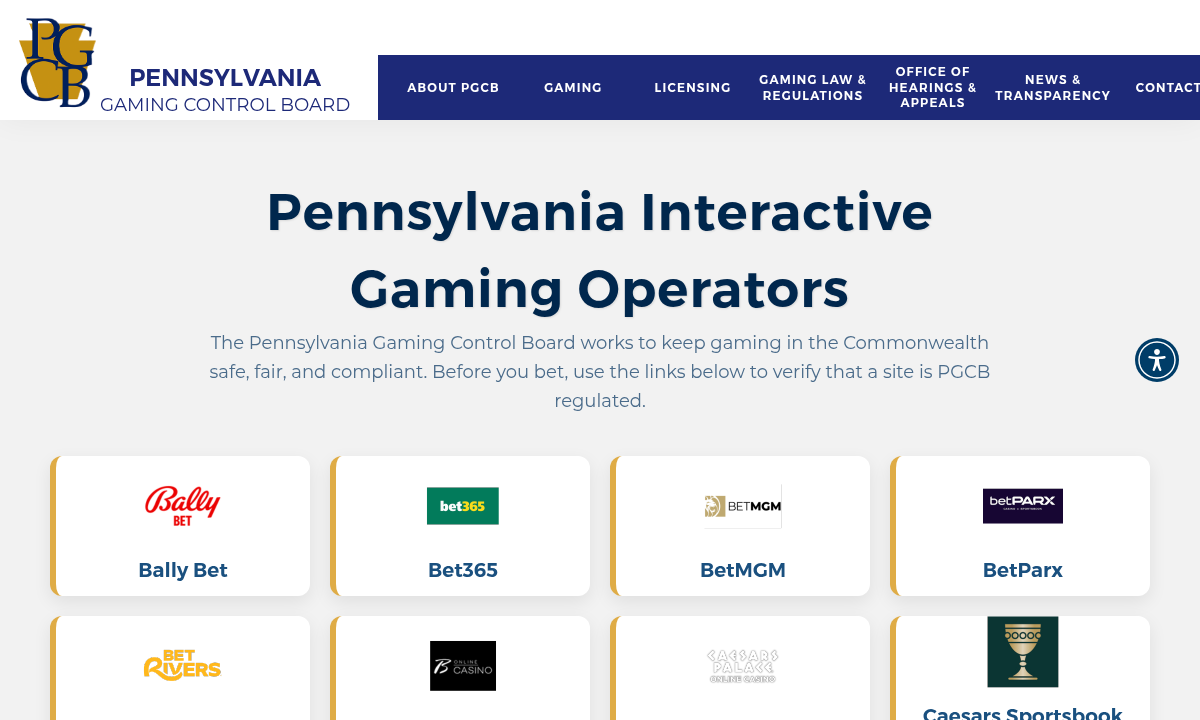
The verified packet supports a green signal for the Pennsylvania regulatory identity. The Pennsylvania Gaming Control Board (PGCB) currently presents the named brand among regulated Pennsylvania interactive gaming operators, and the supplied licence description identifies Bally’s Pennsylvania, LLC as a PGCB Interactive Gaming Certificate holder with a current directory entry. That is evidence of the regulatory listing, not proof that every payment, promotion, login message or customer interaction will be trouble-free.
The practical conclusion is therefore narrow: the supplied evidence supports treating the Pennsylvania identity as legitimate rather than an established scam. It does not establish a universal licence for every state, confirm a withdrawal test, or prove that an unrelated address using the same name is genuine. Verify the address before entering credentials or sending money.

Legal identity and exact host
The named operator is Bally’s Pennsylvania, LLC. The relevant market is Pennsylvania, and the licence description is “PGCB Interactive Gaming Certificate holder; current directory entry.” No expiry date was supplied, so no expiry claim can be made. The source record was checked on August 21, 2026, and its claim is limited to the brands currently presented by the PGCB as regulated Pennsylvania interactive gaming operators.
| Item | Verified position | What it does not establish |
|---|---|---|
| Exact host | pa.ballycasino.com | That every similarly named domain is genuine |
| Named operator | Bally’s Pennsylvania, LLC | That another state uses the same legal entity |
| Regulatory description | PGCB Interactive Gaming Certificate holder; current directory entry | A licence expiry date, because none was supplied |
| Market | Pennsylvania | Permission to offer internet gaming throughout the United States |
| Review signal | Green | Guaranteed approval of every transaction or complaint outcome |
The host and operator must be checked together. A page that shows the brand name but redirects to a different domain, requests payment through an unrelated party, or uses a mismatched legal name needs separate review. The supplied packet does not provide a registration record, terms page, payment receipt, KYC message or redirect history, so those points remain open.
The PGCB directory is the primary regulatory reference. Its current presentation of the named brands supports the Pennsylvania status described above. Read the record as a dated snapshot, not as a permanent guarantee. Regulatory directories can change, and the market shown in a state record matters.
What the Pennsylvania record proves
The strongest evidence is the primary PGCB record, not the brand imagery or a user-review page. It supports three useful propositions: the PGCB currently presents the named brands as regulated Pennsylvania interactive gaming operators; the packet identifies the operator as Bally’s Pennsylvania, LLC; and the supplied licence description calls that entity a PGCB Interactive Gaming Certificate holder with a current directory entry.
It does not prove that the exact host was independently tested during a deposit or withdrawal. It does not establish the processing time for a particular method, the documents requested from a particular customer, or the outcome of a complaint. It also does not show that an account opened outside the permitted market would be accepted lawfully.
The record can be checked through the Pennsylvania Gaming Control Board interactive gaming operators directory. Use the official record to compare the displayed brand and operator. Do not rely on a search result, social post, copied logo or an address supplied in an unsolicited message.
Clone and hostname checks
Hostname forensics is especially useful when a legitimate brand is copied. Start at the left side of the address and read toward the registered domain. In pa.ballycasino.com, pa is a subdomain label and ballycasino.com is the domain portion. A malicious page might use a lookalike spelling, an added word, a different ending, or a separate domain that merely contains the brand name.
| Check | Safer result | Warning sign |
|---|---|---|
| Address spelling | Exact expected spelling: pa.ballycasino.com | Extra letters, hyphens, or a different ending |
| Market label | pa for the Pennsylvania route | A state label that does not match the account or offer |
| Connection | Browser shows a secure connection | Security warning or unusual redirect |
| Legal name | Bally’s Pennsylvania, LLC where operator details are shown | Unrelated company or no operator identity |
| Payment destination | Details consistent with the named service | Personal account, gift card, cryptocurrency wallet, or unrelated merchant |
| Message link | Typed or independently verified address | Link from an unexpected email, text, or social message |
A secure connection is necessary for ordinary account security but is not a licence. Likewise, a padlock does not prove that the page belongs to the expected operator. Enter the address manually or use a saved, verified route. Before logging in, inspect the full address bar rather than only the page design.
The supplied packet contains one brand image and two captures. They are editorial evidence assets, not substitutes for checking the live address. A copied capture can be old, cropped or detached from its original context. If the displayed host differs from the verified host, stop and compare the discrepancy before proceeding.
Legal-or-not answer across states
The supported legal conclusion is limited to Pennsylvania. A Pennsylvania certificate does not automatically authorise internet gaming in Michigan, New Jersey or another state. Each jurisdiction can maintain its own approved-provider list, restrictions and enforcement process. The same brand may use a different operator, domain, product or legal arrangement elsewhere.
Michigan’s primary guidance distinguishes an authorised provider list from operators that have received cease-and-desist letters. It is therefore not sound to transfer the Pennsylvania conclusion to Michigan merely because the brand is familiar. The relevant information must be checked against Michigan’s own records. The Michigan Gaming Control Board legal-versus-illegal gaming guidance provides that jurisdictional context.
New Jersey uses a separate approved-sites approach. The state says sites absent from its approved list are not approved to offer internet gaming there. That means a user should not interpret a Pennsylvania listing as New Jersey approval. The New Jersey Division of Gaming Enforcement internet-gaming-sites information explains the state-specific principle.
| Question | Evidence-led answer |
|---|---|
| Is the Pennsylvania identity supported? | Yes, by the current primary PGCB directory record supplied. |
| Is the brand authorised in every state? | Not established. State approval must be checked separately. |
| Does a familiar name defeat clone risk? | No. The full host and operator still need comparison. |
| Is every customer outcome verified? | No. No withdrawal, KYC or complaint outcome was supplied. |
Payments and deposit tracing
No verified payment method, deposit limit, processing time, fee schedule or payment test was supplied. Those details must not be filled with assumptions based on common casino practice. Before funding an account, identify the merchant or operator shown at the payment step and compare it with the legal identity and account terms. Keep the confirmation, transaction reference and date.
A payment trail should answer four questions: who received the money, which method was used, what amount was authorised, and where the transaction can be reconciled. A mismatch between the account name and an unrelated recipient is a material warning. So is a request to bypass the normal cashier, pay a private individual, or send funds through a channel that cannot be traced.
| Payment stage | Record to retain | Unresolved point in the packet |
|---|---|---|
| Account funding | Date, amount, method and confirmation number | No payment method was verified |
| Merchant identification | Name shown by the bank or payment provider | No merchant descriptor was supplied |
| Balance credit | Account balance and transaction history | No deposit test was supplied |
| Failed transaction | Error, reversal and support response | No failed-payment record was supplied |
| Dispute | Provider case number and correspondence | No dispute outcome was supplied |
Do not treat a successful deposit as proof that a withdrawal will be successful. A deposit confirms only that one transaction was accepted. Read the applicable terms, use an account in your own name where required, and avoid sending funds while the address or operator identity is uncertain.
Withdrawals and KYC limits
The packet contains no withdrawal test. Consequently, there is no supported claim about approval speed, pending periods, minimum withdrawal, maximum withdrawal, fees, reversals or the documents that will be requested. Those unknowns are important because a service can have a supported regulatory identity while an individual transaction remains subject to verification and account rules.
Know-your-customer checks can involve identity, age, address, payment ownership or source-of-funds information, depending on the applicable process. The supplied evidence does not state which documents are required here. Do not send identity documents to a suspicious address or through an unsolicited message. Confirm the host first and use the recognised account or support route.
| Before requesting a withdrawal | Why it matters |
|---|---|
| Confirm the address in the browser | Prevents sending credentials or documents to a clone |
| Check the account name and payment ownership | Mismatches can delay or prevent processing |
| Save the balance and request details | Creates a dated record if support is needed |
| Read the current account terms | Limits and verification conditions may apply |
| Keep every support reference | Allows a complaint to be traced chronologically |
A delayed withdrawal is not, by itself, proof of a scam. It may reflect verification, a payment reversal, a limit or a technical issue. Conversely, a request for money to “unlock” a withdrawal, especially to an unrelated recipient, should be treated as a serious warning and documented before any further action.
Complaints and escalation route
No complaint record or adjudicated adverse finding was supplied. A user report is not the same as a regulator’s finding, and a search page cannot establish that an allegation is true. If there is a payment or account problem, first preserve the relevant evidence: the exact address, date and time, transaction reference, messages, account notices and the response received.
Use the service’s recognised support channel for an initial written complaint and ask for a case number. Keep the language factual: state what happened, when it happened, the amount involved and the remedy requested. Do not send additional money merely because a message promises faster release of funds.
For a matter involving Pennsylvania interactive gaming, identify the relevant state regulator and follow its current complaint instructions. The evidence packet does not supply a complaint form, deadline, jurisdictional test or outcome, so none can be stated here. A regulator route does not guarantee reimbursement; it provides a formal channel for a matter that cannot be resolved directly.
| Complaint record | Minimum detail |
|---|---|
| Identity | Exact host and named operator |
| Timeline | Dates, times and sequence of events |
| Money | Amount, currency, method and reference |
| Conduct | Precise statement or action, without exaggeration |
| Requested remedy | Refund, account explanation, correction or other specific outcome |
| Attachments | Receipts and correspondence, with sensitive data minimised where possible |
The internal complaint guidance is available through complaint and scam warnings. For the site’s evidence standards and source handling, see our methodology. These internal routes do not change the facts in the supplied record and are not substitutes for an official decision.
What user-review context can and cannot show
The supplied Trustpilot search surface is dated August 21, 2026. It is contextual only: it shows a search surface for user-review profiles mentioning the brand. It does not prove an allegation, safety outcome, licence, payment result or complaint finding. Individual posts can be incomplete, mistaken, duplicated or unrelated to the Pennsylvania host.
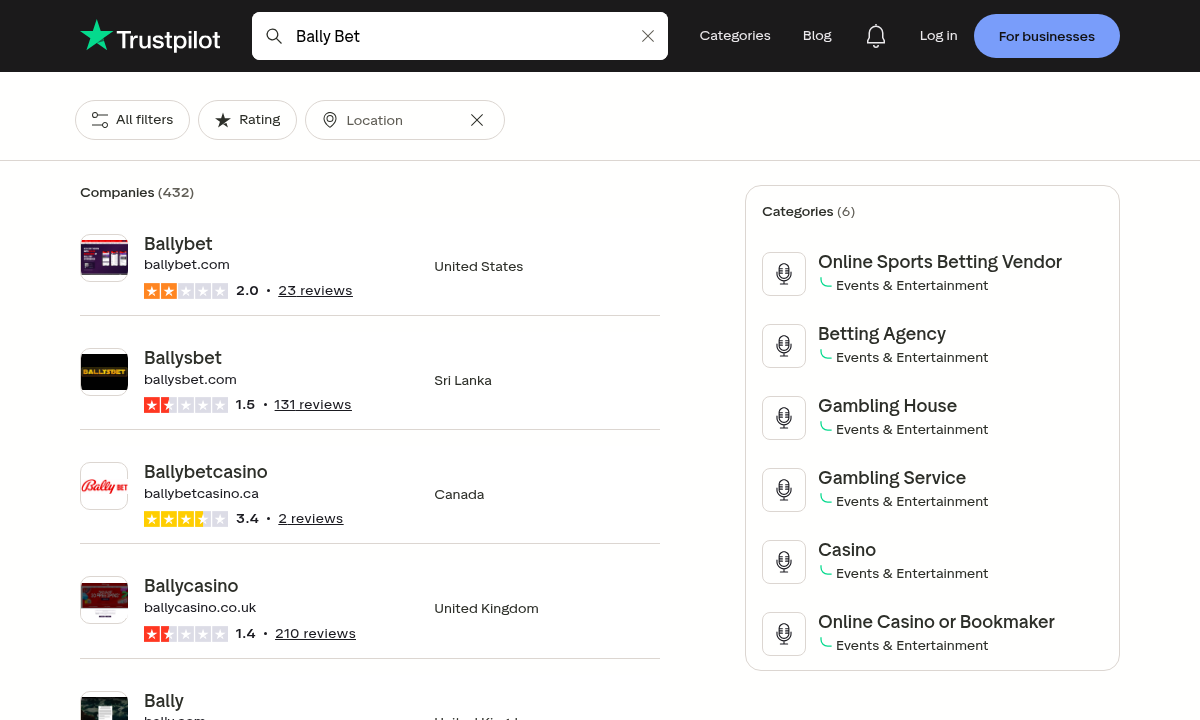
Use user reports as prompts for questions, not as verdicts. Look for a precise date, the exact host, a transaction trail and a response from the operator. Even then, one report should not be generalised to every customer. A positive review is not proof of licensing, and a negative review is not proof of fraud.
The context capture is included to show the evidence boundary. It should not be read as confirmation of any allegation or as a substitute for the primary PGCB record. The primary record supports the Pennsylvania regulatory signal; the user-context record supplies no adverse finding.
Evidence chronology and method
The evidence packet contains records checked on August 21, 2026. The PGCB directory is the decisive primary record for the Pennsylvania signal. The Michigan and New Jersey records provide jurisdictional comparison, not proof about the Pennsylvania operator. The Trustpilot search surface is contextual and cannot establish a licence or misconduct.
| Date checked | Source role | Use in this assessment |
|---|---|---|
| 2026-08-21 | Pennsylvania primary record | Supports the current Pennsylvania operator presentation |
| 2026-08-21 | Michigan primary guidance | Shows that Michigan approval is jurisdiction-specific |
| 2026-08-21 | New Jersey primary guidance | Shows that New Jersey uses its own approved-site list |
| 2026-08-21 | User-context search surface | Provides context only; no finding is drawn from it |
The method is to match four elements without collapsing them: the exact host, the named legal entity, the relevant jurisdiction and the date of the primary record. Next, separate what is directly recorded from what is merely reported by users. Finally, list operational unknowns rather than turning them into either praise or suspicion.
That method produces a green signal with a narrow basis: current primary evidence supports the precise Pennsylvania regulatory identity. It does not mean that all risks are absent. It also does not make a different host, state or payment recipient equivalent to the verified combination.
Limits, risks and correction path
The main limitations are clear. No licence expiry date was supplied. No payment method or transaction was tested. No withdrawal was tested. No KYC request was reviewed. No complaint outcome was supplied. No redirect chain, registration record or account terms were included. These omissions prevent a broader performance verdict.
The practical risks are address substitution, state-jurisdiction confusion, payment-recipient mismatch, unsolicited login requests and premature conclusions based on user reviews. Reduce those risks by checking the full host, comparing the operator with the primary record, retaining transaction evidence and stopping when a message asks for unusual payment or identity-document handling.
If a material error is found, preserve the dated source, identify the exact statement, explain why it is inaccurate and provide the relevant correction record. Send that information through the corrections contact route. A correction request is not itself proof that the original claim was wrong; it must be assessed against dated evidence.
Bottom line: scam or legitimate?
On the supplied evidence, the Pennsylvania identity is supported as legitimate rather than established as a scam. The green signal rests on the current primary PGCB directory presentation and the supplied operator match: Bally’s Pennsylvania, LLC. The conclusion applies to the verified Pennsylvania host, pa.ballycasino.com, and not automatically to lookalike addresses or other states.
The sensible next step is a final host check before login or payment. Confirm the spelling, compare the operator and state, and retain transaction records. Treat payment, withdrawal and KYC performance as unverified until a dated, specific record exists. For a contextual overview of other reviewed services, use the casino review index; comparisons do not replace the exact-host check.
If you choose to continue, use the supplied route only after confirming that the browser remains on the expected address: See the regulated play route. This commercial link is not evidence of licensing, payment success or a guaranteed outcome.
Frequently asked questions
Is Bally Bet a scam or legitimate in Pennsylvania?
The supplied evidence supports a legitimate Pennsylvania regulatory identity rather than an established scam. The PGCB currently presents the named brand among regulated Pennsylvania interactive gaming operators, and the packet identifies Bally’s Pennsylvania, LLC as a current PGCB Interactive Gaming Certificate holder. This does not guarantee every transaction or customer outcome.
What is the verified host?
The verified host supplied for this assessment is pa.ballycasino.com. Check the complete address, including the pa market label and the ballycasino.com domain portion. A similar-looking address, different domain ending or unexpected redirect needs separate verification.
Is the Pennsylvania approval valid in every state?
No such conclusion is supported. State gaming approval is jurisdiction-specific. The Pennsylvania record does not establish authorisation in Michigan, New Jersey or any other state. Check the relevant state’s primary list or guidance before treating the service as authorised there.
Were payments and withdrawals tested?
No. The packet supplies no payment method test, deposit record, withdrawal test, processing result or fee verification. A regulatory listing should not be presented as proof that a particular deposit or withdrawal will succeed.
What KYC documents will be required?
The packet does not specify the documents or verification stages that may apply. Confirm the address first, use the recognised account route, and do not send identity documents through an unsolicited message or to an unrelated recipient.
How should a complaint be documented?
Record the exact host, operator name, dates, amount, payment reference, account notices, correspondence and the remedy requested. Ask the service for a written case number, then follow the applicable Pennsylvania regulatory complaint instructions if direct support does not resolve the matter. A user report alone is not an official finding.
What should I do if the address looks different?
Stop before logging in or paying. Compare the full address with pa.ballycasino.com, inspect any redirect, and check the operator against the current PGCB record. Do not rely on a copied logo, search snippet or message link as proof that the altered address is genuine.